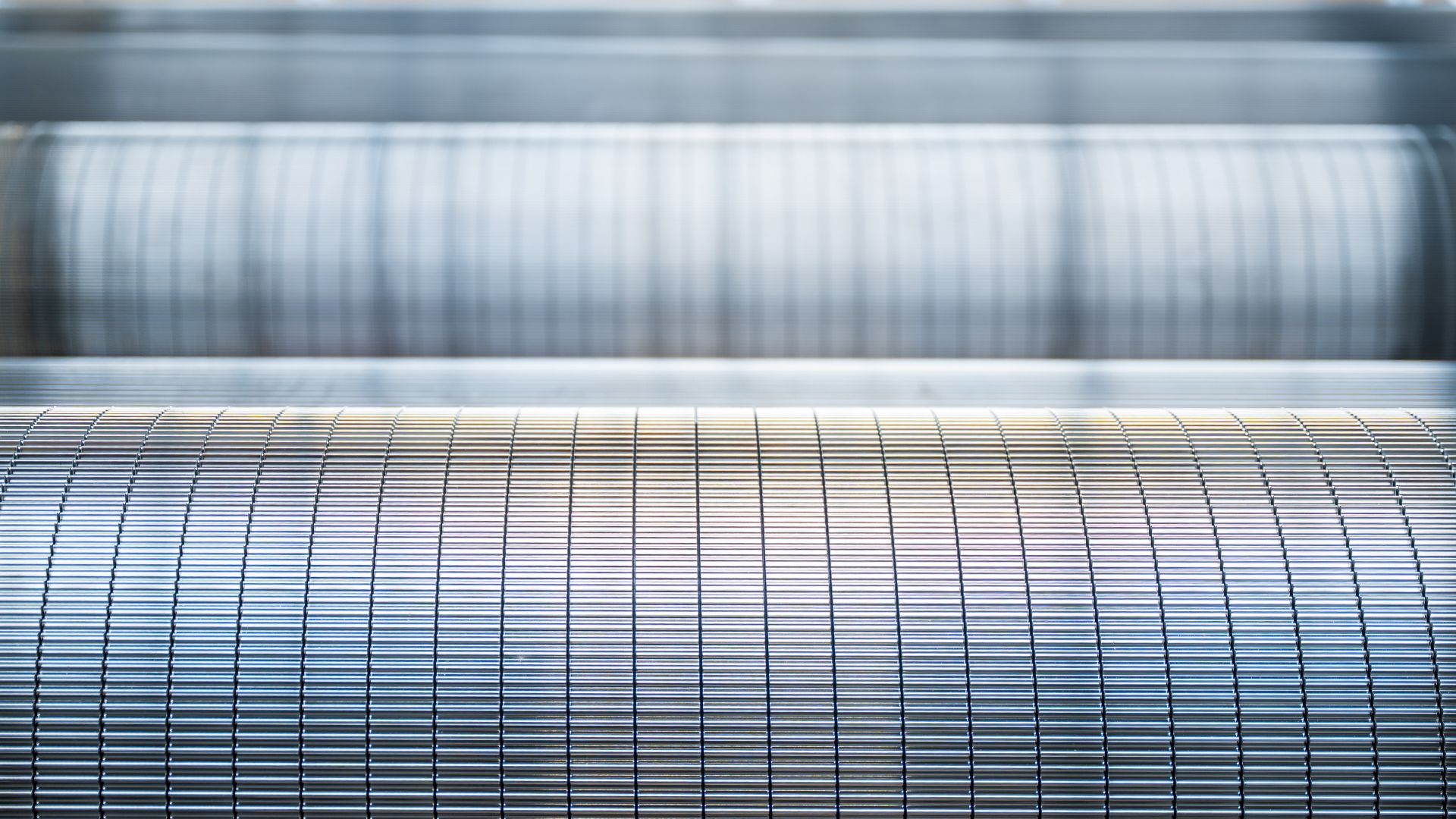
Corrugated board is made by moistening and preheating a paper web and forming it into a fluted structure between two heated corrugating rolls. It is then bonded to a flat liner. This first step is handled by the single facer. The single-faced web then travels through the line to the double backer, where the second liner is applied. Only the combination of a fluted medium and flat liners turns thin paper into a material that can carry weight.
In this process, the corrugating roll is the component with the greatest influence on the result. It forms the profile, transfers the heat and distributes the pressure. How well it does this over months affects paper consumption, line speed and downtime.
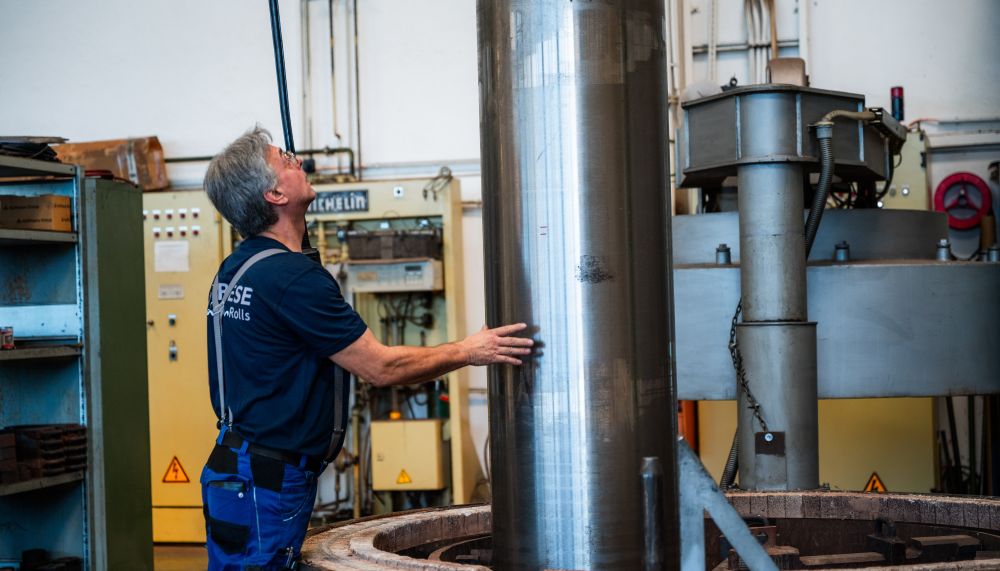
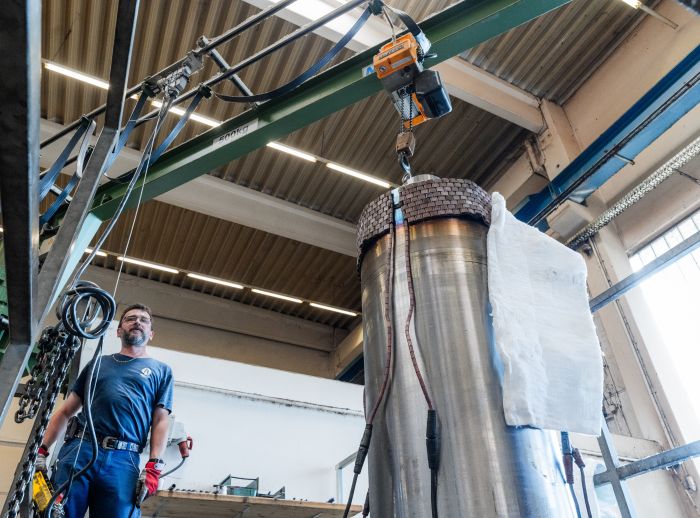
Hardening makes the surface layer of the steel significantly harder and more wear-resistant while the core stays tough. We run various heat treatments in-house for this, so we decide for ourselves how, and how evenly, the hardening is done, rather than relying on a contract hardening shop.
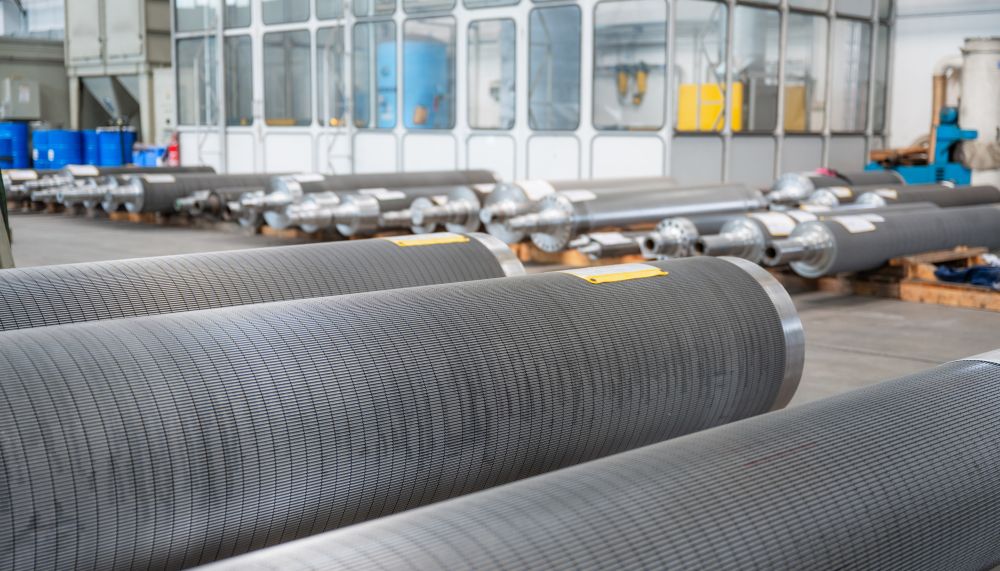
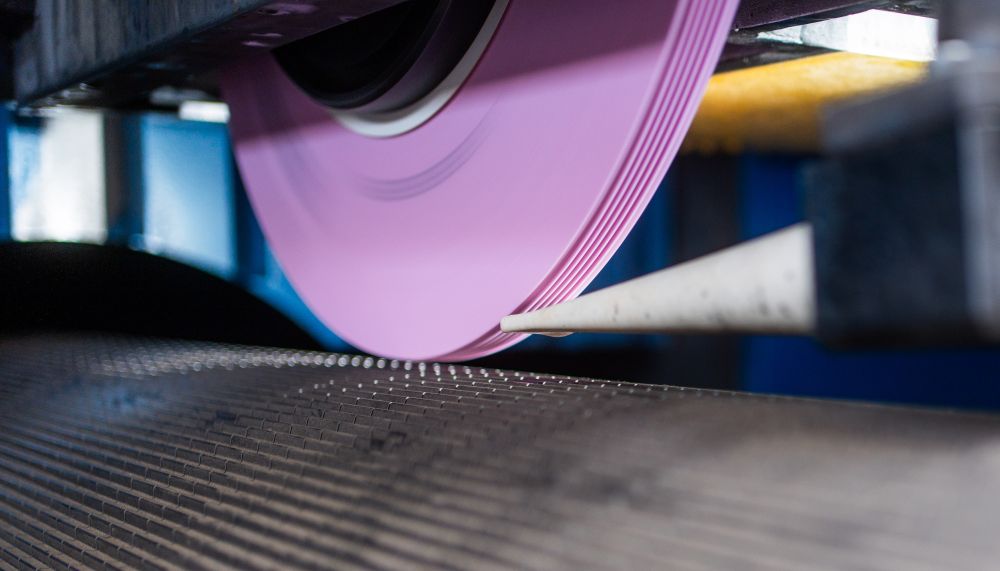
In thermal spraying, a filler material is melted and propelled at high speed onto the component surface, where it forms a solid coating. We use the HVOF process, high-velocity oxy-fuel spraying, with hard metals such as tungsten carbide and chromium carbide as well as steel alloys. Coating plant, stripping bath, grinding and polishing are all under one roof.
Each of these technologies costs more to buy than the basic version. It pays off if it saves more over the service life than it costs extra. We make exactly this calculation transparent so that you can justify it internally.
Not everyone who lands on this page has spent twenty years working on a corrugator. Here are the basics in short answers. If you want to go deeper, you will find more on the technology pages, or simply get in touch.
Corrugated board is a composite material made of at least one fluted paper web and two flat liners bonded together. The fluted structure gives the material its stiffness at low weight.
In the single facer, a paper web is moistened, preheated and formed into a flute between two heated corrugating rolls, then bonded to a liner. The second liner is added in the double backer. The board is then scored and cut.
At its core, a corrugator consists of the roll stands, single facer, double backer, heating and traction section, and slitter-scorer and cut-off. The corrugating rolls sit right at the start, in the single facer.
Hardening is a heat treatment process in which the surface layer of the steel is improved by various methods. This makes the surface significantly harder and more wear-resistant while the core stays tough.
In thermal spraying, a filler material is melted and propelled at high speed onto the component surface, where it forms a solid coating. Friese mainly uses HVOF (high-velocity oxy-fuel) spraying.
Corrugated board achieves greater stiffness with less material, because the fluted structure keeps the two liners apart and transfers forces via the flanks. That saves weight and raw material.
If you want to know which combination of profile, coating and heating suits your line, we would rather answer that on the phone than in a form. Tell us briefly what it is about and we will call you back.